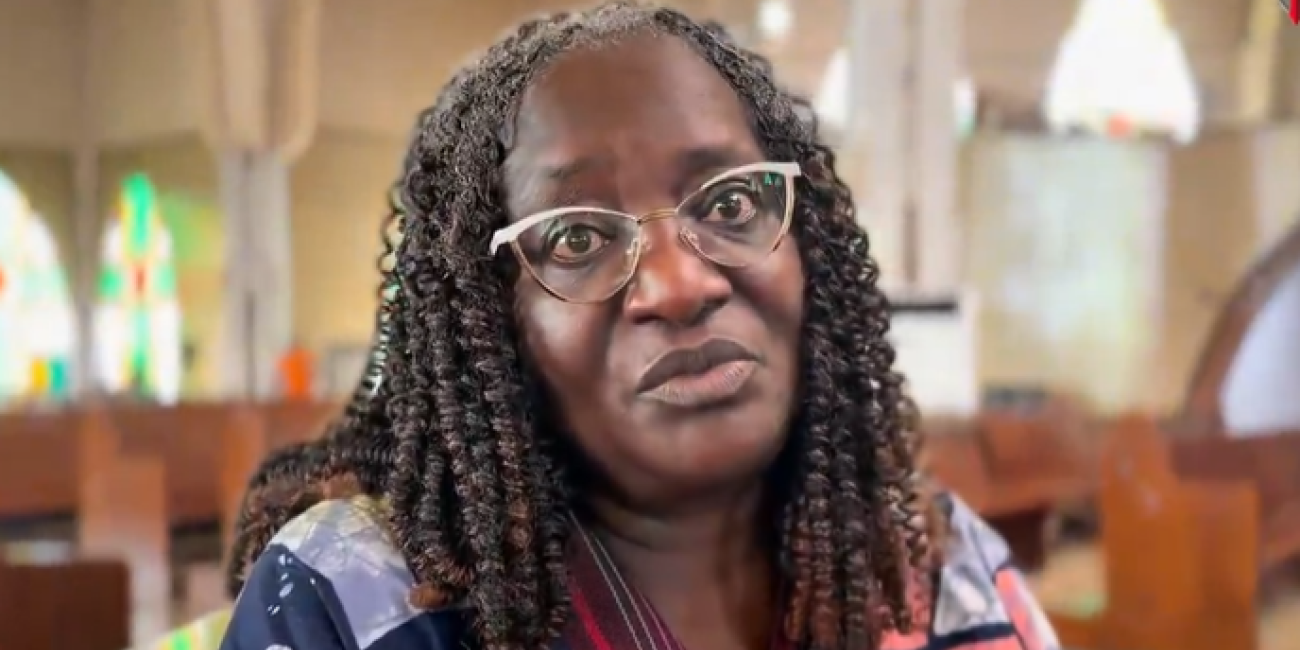
Ibanga, founder of the Women Without Walls Initiative, said the situation had remained a “heavy burden” for her after more than two decades of advocacy on issues affecting the region.
Nigerian pastor and peace advocate Esther Ibanga has said insecurity and attacks in Nigeria’s North-Central region have affected virtually every aspect of life in the region, including the economy, social life and religious activities.
Ibanga, founder of the Women Without Walls Initiative, said the situation had remained a “heavy burden” for her after more than two decades of advocacy on issues affecting the region.
She spoke in a video posted on X on Sunday by conflict reporter Masara Kim.
Ibanga said she was among women who led a march following the 2010 Dogo Nahawa massacre in Plateau State, where scores of people were killed.
The Dogo Nahawa massacre was a brutal, early-morning attack on March 7, 2010, in which armed herders killed hundreds of predominantly Christian villagers in the village of Dogo Nahawa and surrounding settlements near Jos, Plateau State, Nigeria
Around 3:00 AM, armed men surrounded the sleepy, mostly Berom Christian village of Dogo Nahawa, as well as the neighbouring villages of Ratsat and Zot. They fired guns into the air to cause panic, set mud huts on fire, and attacked residents with machetes and knives as they tried to flee their homes.
The assault is widely understood to have been a reprisal (revenge) attack. It followed severe inter-communal and sectarian violence that occurred earlier in January 2010 in nearby Kuru Karama, where around 150 Muslim residents were massacred.
Ibanga said her own family house was subsequently burnt down by Muslims.
“You know, I was one of the team of women that led the march after the Dogo Nahawa massacre, you know, in 2010. And right after that, my own family house was burned to the ground by Muslims, you know, and there’s basically no one in the North Central that’s not suffered some kind of loss or the other,” she said.
According to her, people across the North-Central region have either suffered attacks themselves or know someone close to them who has been affected by terrorism.
“You always know someone close to you that has been attacked by terrorism, you know. And the way it has affected life is people live in fear, live in insecurity,” she said.
Ibanga said the government had not done enough to protect residents, particularly those living in rural communities.
“The government is not doing enough to protect, especially people in villages, you know, and communities. Whole communities are wiped out,” she said.
She said the insecurity had also taken a toll on economic activities, social relations and religious life.
“So it has affected our economy, it has affected our social life. It has also affected faith,” she said.
“So if you see it, you can comfortably say it has affected every aspect of our lives. And it’s something that is still a heavy burden for me.”
Ibanga also highlighted the impact of insecurity on farming, saying many farmers could no longer safely access their farms because of attacks.
“I mean, farmers can’t go to farm, you know, because they are attacked and killed,” she said.
She cited the case of a Benue delegate identified as Pastor Barnabas, whom she said survived an attack while working on his farm.
“Actually, one of the Benue delegates is a survivor of that kind of attack from the farm, and we invited him to come, Pastor Barnabas. You know, he was attacked on his farm, massacred, but, you know, he survived it,” she said.
The pastor stressed that the violence was not merely a historical problem, but an ongoing crisis affecting communities in the region.
“So these are not stories of yesteryears. They are things that are currently happening, and it has wrecked our economy, it has wrecked our social life, wrecked our spiritual life,” she said.
“I don’t see any aspect of our lives that’s not affected by what’s going on, particularly in the north-central region.”
Ibanga is the founder of Women Without Walls Initiative and a recipient of the 32nd Niwano Peace Prize for her efforts to promote peace and reconciliation among people of different ethnic and religious backgrounds in Jos, Plateau State.